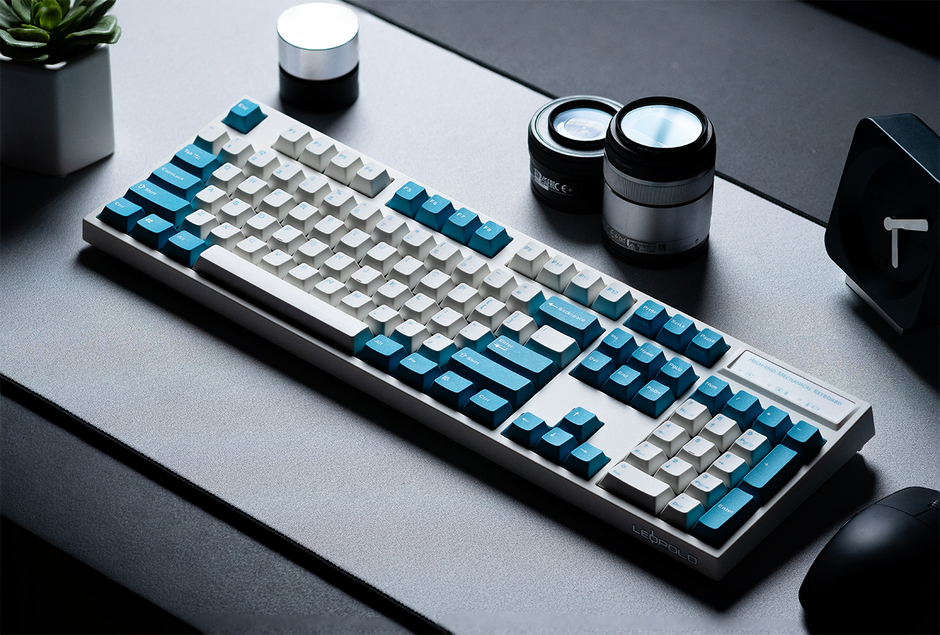


However, if you’re interested in experimenting with analog, magnetic sensors are fast, precise, and beginning to gain favor among keyboard enthusiasts.
There are two main terms you’ll hear when it comes to magnetic sensors: HE (Hall Effect) and more recently, TMR (Tunneling Magnetoresistance.)
Both promise precision and durability, but they work quite differently - and those differences can matter when you’re deciding what kind of keyboard to buy.
How They Work
Hall Effect sensors detect voltage changes caused by a magnetic field. This is tried-and-true technology, and it’s been used in keyboards, automotive sensors, and other electronics for decades. Because it’s been around so long, there’s already a decent aftermarket ecosystem.
TMR sensors, on the other hand, measure resistance changes within the magnetic field. The key difference? TMR can measure along multiple axes, while Hall Effect is typically limited to a single linear axis. That extra dimension of sensing translates to better accuracy and lower latency in real-world use.
Accuracy and Latency
This is where TMR really shines. Because it isn’t only reading straight-line measurement, TMR can capture more subtle movement data. That means keystrokes are registered faster and more precisely. This gives an edge to gamers chasing every millisecond of input speed, or typists trying to glide efficiently over the keys.
Flexibility and Switch Compatibility
Hall Effect keyboards are generally limited to magnetic switch designs, which work great if you want smooth, adjustable actuation.
TMR tech opens the door to something new and interesting, however: thanks to its off-axis sensing, it can support hotswap sockets, making it possible to combine both traditional mechanical switches and magnetic ones on the same board.
In other words, a TMR keyboard could become a true hybrid, letting you use your favorite MX switches alongside magnetic ones, if implemented correctly.
Power Efficiency
If you’re using a wireless keyboard, battery life is a big deal. TMR has the advantage here. Since it measures resistance instead of voltage, it requires less power to operate. Less power draw equals longer time between charges, or the option for implementing a smaller, lighter battery.
Hall Effect sensors are solid and reliable; they simply need more juice to do their job.
Cost and Availability
Hall Effect sensors are more established, so if you’re customizing your setup, you’ll find a wider selection of parts, stronger support (both from manufacturers and from community forums), and generally lower prices.
TMR is still relatively new to the market, and therefore less common - meaning your compatibility and selection choices may be limited. Right now, this also means that TMR tends to cost more (though prices may level out as adoption grows.)
Quick Comparison
Hall Effect:
• Voltage-based sensing
• Established technology, more aftermarket options
• Higher power usage
• Generally more affordable (for now)
TMR:
• Resistance-based sensing
• Multiaxis accuracy, lower latency
• Lower power draw (great for wireless)
• Potential for hybrid hotswap keyboards
• Less common and usually higher-priced
Final Thoughts
If you decide to try an analog switch keyboard and want something safe and widely supported, Hall Effect is the reliable choice today. It has become a solid favorite of gamers and typists alike, and is highly recommended by mechanical keyboard enthusiasts who have made the jump over to magnetic switches.
If you’re looking ahead, TMR feels like the future: higher accuracy, lower latency, longer battery life, and the potential to mix magnetic and mechanical switches on one board. That’s the kind of innovation that could reshape the hobby.
Frequently Asked Questions (FAQ)
Q: Are TMR sensors faster than Hall Effect?
A: Yes. Because TMR can measure across multiple axes, it’s generally more accurate and introduces less latency compared to Hall Effect.
Q: Which is better for wireless keyboards?
A: TMR. It uses less power, which means longer battery life and/or a more portable design.
Q: Can I use regular mechanical switches with TMR?
A: Potentially, yes. The off-axis sensing allows for hotswap socket applications, which could let you use both traditional and magnetic switches within the same keyboard.
Q: Why are Hall Effect sensors more common right now?
A: They have been around longer, so there’s more aftermarket support and availability.
Q: Which sensors are more expensive, TMR or Hall Effect?
A: TMR switches are generally more costly than Hall Effect switches at the moment.
Q: Where can I find keyboards using magnetic switches?
A: Check out our collection of HE and TMR keyboards here.